Profile
History v2
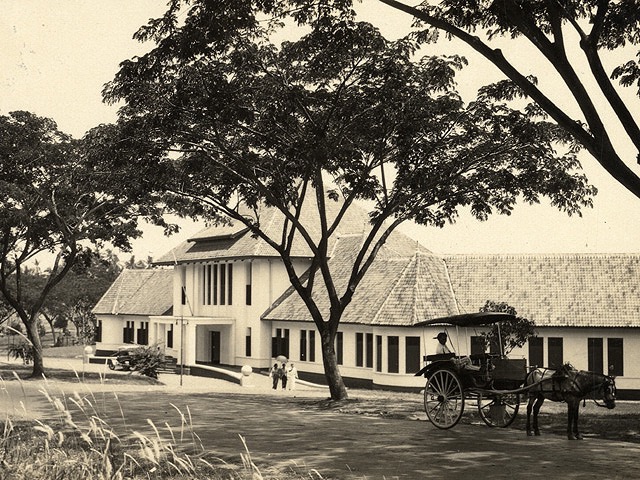
The history of the Child Health Science study program at the Faculty of Medicine, Diponegoro University, began with the establishment of Dr. Kariadi General Hospital (RSUP) as Centrale Burgelijke Ziekeninrichting (CBZ) on September 9, 1925. During the Japanese occupation, Dr. Kariadi Hospital was renamed the Central People’s Hospital (PURUSARA). Subsequently, in 1950, it was renamed Semarang Central General Hospital (RSUP). In 1961, Diponegoro University was established and began collaborating with Semarang Central General Hospital in the education process for medical students. On April 14, 1964, Semarang Central General Hospital officially changed its name to Dr. Kariadi Central General Hospital (RSUP). In 1965, the Child Health Science Department of Dr. Kariadi Hospital was renamed the Child Health Science Department. Since 1970, the Child Health Science Department has been accepting students for the Pediatric Specialist Education Program.
An internal Child Health Science (IKA) work meeting involving internal and external stakeholders, as well as lecturers, educational staff, and the Faculty of Medicine at Diponegoro University, held by the Child Health Science Study Program in 2019, established a change in the 2017 Vision, Mission, Goals, and Targets of the Child Health Science Study Program to the 2019 Vision, Mission, Goals, and Targets of the Child Health Science Study Program. This is outlined in the 2019 Child Health Science Study Program Strategic Plan (Renstra): “Providing specialist pediatric medical education that plays an active role in the development of medical science and technology at the national and global levels through the Tri Dharma of Higher Education.” A complete description of the strategy can be found in the 2019 Child Health Science Study Program Strategic Plan (Renstra), which outlines the goals, objectives, strategies, policies, programs, and success indicators.
In 2020, the Vision, Mission, Goals, and Targets of the Child Health Science Study Program were again revised to “Providing specialist pediatric medical education that actively contributes to the development of medical and health science and technology at the national and global levels.” This change was based on Dean’s Decree No. 497/UN7.5.4.2/HK/AK/2020. The quality assurance process through the LAMPTKES accreditation survey in October 2021 provided input for the strategic policy direction change, recommending a review of the program’s vision, mission, goals, and objectives to ensure a scientific vision with distinctive competency outcomes, particularly for students. This vision aligns with the demographics of the location, the student learning process, disease variations, and the potential for specific competencies. This scientific vision should provide a unique identity, distinguishing it from the visions of other pediatrician educational institutions.
The evaluation of the vision, mission, goals, and objectives of the Child Health Science Study Program at the Faculty of Medicine, Diponegoro University, was conducted through internal discussions with the Faculty of Medicine leadership, representatives of the Faculty of Medicine’s quality assurance team, lecturers, educational staff, and student representatives from the Child Health Science Study Program, as well as external stakeholders including alumni, graduate users, professional organizations, and representatives from Dr. Kariadi General Hospital and their networks. This workshop was held on February 23-24, 2022, at the Child Health Science Department (IKA) of the Faculty of Medicine, Diponegoro University/KSM Pediatrics of Dr. Kariadi General Hospital. The evaluation results from the workshop provided a decision on changes to the study program’s policies to deepen and develop pediatrics in community medicine, particularly in coastal communities.
The development of this scientific vision provides new policy directions in education, research, and community service. The new vision and mission of the Child Health Science Study Program, focusing not only on hospital-based education and research, are expected to foster the development of community medicine-based education and research. Community service activities are also expected to make a tangible contribution to improving child health in the community. The development of child health in coastal communities was highlighted considering the location of the Pediatric Health Study Program at the Faculty of Medicine, Diponegoro University, which is located in the northern coastal area of Java. Many referral cases to Dr. Kariadi General Hospital, the primary teaching hospital, also originate from the northern coastal area. This situation is expected to have an impact on the existence of the Pediatric Health Study Program at the Faculty of Medicine, Diponegoro University, to be more beneficial to the surrounding community. The development of education, research, and community service for children’s health in coastal areas can be recognized nationally and internationally through the publication of intellectual works by lecturers and resident/student.